
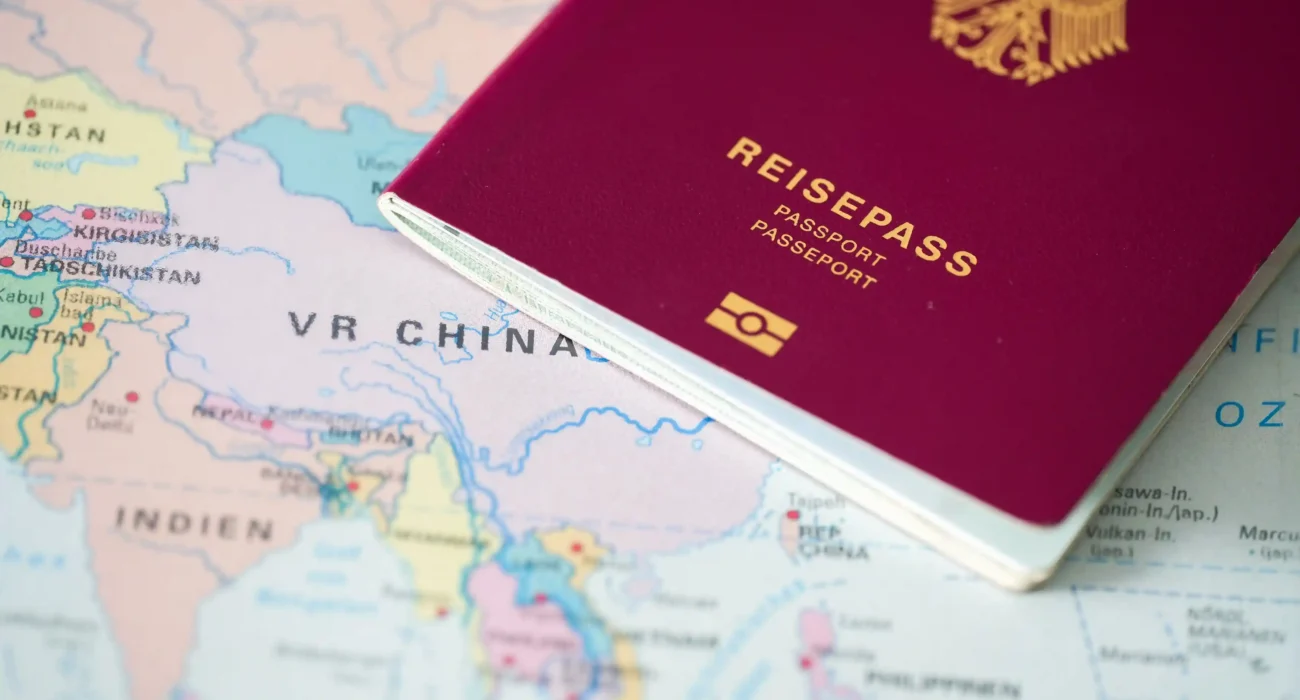
Choosing between Germany visa types is the first decision in any application, and a wrong choice can mean delays or a refusal. Germany has different visas for a holiday, a business trip, university study, a job, a job search and family reunion, and each has its own rules.
This guide compares the main options and explains how UAE residents can pick the right one.
The Two Main Categories: Schengen (Type C) vs National (Type D)
Most German visas fall into one of two groups.
Schengen visa (Type C) is for short stays of up to 90 days in any 180-day period. It covers tourism, visiting family and friends, and short business trips.
National visa (Type D) is for stays longer than 90 days, such as study, employment, job-seeking and family reunification.
| Feature | Schengen visa (C) | National visa (D) |
|---|---|---|
| Main purpose | Short visits | Long-term stay |
| Typical duration | Up to 90 days in 180 | Depends on the purpose |
| Tourism | Yes | Not the main purpose |
| Short business visit | Yes | Not normally needed |
| University study | Not suitable | Yes |
| Employment | Not for taking up a job | Yes, if eligible |
| Family reunification | Short visits only | Yes |
Many national visa holders receive a residence permit after arriving in Germany, so the visa is often the entry step.
Quick Guide: Which Visa Fits Your Purpose?
| Your purpose | Visa to explore | Stay type |
|---|---|---|
| Holiday or sightseeing | Tourist Schengen visa | Short |
| Visit relatives or friends | Visitor Schengen visa | Short |
| Business meetings or trade fairs | Business Schengen visa | Short |
| University studies | Student national visa | Long |
| Take up a job | Work visa or EU Blue Card | Long |
| Look for a job | Opportunity Card | Long (up to 12 months) |
| Join a spouse or family | Family reunification visa | Long |
| Vocational training | Training (Ausbildung) visa | Long |
This table is a starting point. Requirements also depend on your passport nationality and personal situation.
1. Germany Tourist Visa
This is for holidays, sightseeing and leisure travel. If your passport requires a Schengen visa, you apply before you travel.
Typical documents:
- Valid passport
- UAE residence visa and Emirates ID, where applicable
- Application form and photograph
- Travel itinerary and accommodation details
- Travel medical insurance
- Proof of finances
- Employment or business documents
The standard Schengen visa fee is €90 for adults, with reduced fees for some children and nationalities. The authorised stay depends on the visa issued, with 90 days in any 180 as the maximum.
2. Germany Business Visa
This short-stay Schengen visa covers business meetings, conferences and trade fairs. You will normally need an invitation from the German company, a letter from your UAE employer or company, your itinerary, and evidence of who is paying for the trip.
Business visa vs work visa: attending meetings is not the same as working in Germany. A business visa does not allow you to take up employment. If your purpose is to work, you need a work-related national visa.
3. Germany Student Visa
A student visa is a national visa for long-term study, generally needed by non-EU nationals, subject to nationality exceptions. It is a major category for people in the UAE considering German universities.
Main requirements:
- Admission to a German university, or other accepted proof of study eligibility
- Recognised educational qualifications
- Proof of finances
- Health insurance
- Language evidence, if the programme requires it
- Passport and application documents
Financial proof: Most applicants show funds through a blocked account (Sperrkonto), a bank account that releases a fixed monthly amount while you study. The reference figure for 2025/26 was €992 a month (€11,904 a year). Check the latest official figure before opening an account, because it is updated periodically.
Applicant visa: If you don’t yet have admission but want to travel to Germany to seek a university place, a separate student applicant visa may apply where eligible.
4. Germany Work Visa
Germany has several employment routes. They are not the same visa, so make sure you apply under the right one.
Skilled worker visa: for people with a recognised university or vocational qualification and a matching job offer.
EU Blue Card: for highly qualified graduates with a qualifying job offer. For 2026 the standard minimum gross annual salary is €50,700. A lower threshold of €45,934.20 applies to shortage occupations, recent graduates and certain IT specialists, and these cases generally need Federal Employment Agency approval. Only fixed salary counts, not bonuses.
Experienced professionals: some applicants with substantial practical experience may qualify even without a traditional degree, including certain IT specialists, if they meet the legal conditions.
Typical documents: employment contract or job offer, qualification certificates, evidence that your qualification is recognised in Germany (where required), CV, passport and application forms.
5. Germany Opportunity Card (Chancenkarte)
The Opportunity Card lets eligible non-EU nationals enter Germany to look for a job without already having a job offer. It is issued for up to 12 months under Section 20a of the Residence Act.
There are two routes.
Route 1: Skilled worker. If your university or vocational qualification is fully recognised in Germany, you qualify without using the points system.
Route 2: Points system. If not, you need at least 6 points, plus a qualification recognised in the country where you obtained it. Points are awarded for factors such as:
- Qualification: partial recognition of your qualification
- Work experience: relevant professional experience
- German language: A2 earns 1 point, B1 earns 2, B2 or higher earns 3
- English: higher levels can earn extra points
- Age: younger applicants earn more points
- Ties to Germany: a previous stay of six months or more in the last five years, or a partner who also qualifies
Requirements for both routes:
- Language: at least German A1 or English B2
- Finances: proof that you can support yourself, about €1,091 a month (€13,092 for 12 months) per the latest guidance, usually through a blocked account, a declaration of commitment (Verpflichtungserklärung), or income
- Health insurance and valid passport
Can you work? Yes, but only within limits. Holders may work part-time (up to 20 hours a week) and do short trial employment. This is not the same as unrestricted full-time work.
| Feature | Opportunity Card | Work visa |
|---|---|---|
| Job offer needed first? | No | Generally yes |
| Main purpose | Job search | Taking up a job |
| Work rights | Limited | Based on the work permit |
Use the official self-check tool on the Make it in Germany portal to estimate your eligibility.
6. Germany Family Reunification Visa
This national visa lets eligible family members join relatives who legally live in Germany.
- Spouse or partner: marriage documents, proof of relationship, and in many cases basic German language evidence
- Children: the general route for eligible minor children joining parents
- Parents: subject to strict conditions and not automatic
Typical documents: marriage or birth certificates, passport copies, proof of the sponsor’s residence status, accommodation and financial evidence, and language certificates where required. Requirements depend on the relationship and the sponsor’s immigration status.
Other Visa Types to Know
- Vocational training (Ausbildung) visa: for a place in an approved training programme
- Language course visa: for qualifying language courses
- Research visa: for researchers with a hosting agreement
- Self-employment visa: for entrepreneurs and freelancers who meet legal and business requirements
The official German Visa Navigator lists these and more.
Germany Visa Requirements for UAE Residents
Does a UAE residence visa make you visa-free? No. Whether you need a visa depends on your passport nationality, not on living in the UAE. Residents with Pakistani, Indian, Filipino, Bangladeshi, Egyptian and many other passports should check the rules for their own nationality. Do not assume all nationalities face identical requirements.
Where do you apply? Follow the instructions of the German mission responsible for your place of residence in the UAE. The German Consular Services Portal supports online applications for several national visa categories, including employment, study, the Opportunity Card and family reunification. You may still need an appointment to present original documents and give biometrics.
Also make sure your UAE residence permit is valid for the whole application period, and check how long it has left before you apply.
How to Apply for a Germany Visa from Dubai
- Define your purpose and the length of your stay.
- Check whether your passport requires a visa.
- Choose the right category, Schengen (C) or national (D).
- Read the official checklist for that category.
- Prepare your documents.
- Complete the online application or book an appointment.
- Attend your appointment and provide biometrics.
- Pay the visa fee (the national visa fee is typically €75, but confirm the current amount).
- Wait for the decision and follow any further instructions.
Processing times vary by visa type and workload, so apply well ahead of your travel or start date.
Common Mistakes to Avoid
- Applying for a tourist visa when your real purpose is work
- Treating a business visit as permission to work
- Using a Schengen visa for long-term study
- Assuming the Opportunity Card is the same as a work visa
- Ignoring qualification recognition
- Submitting incomplete financial evidence
- Assuming UAE residency means visa-free entry
- Following outdated checklists
- Leaving out relevant information, or providing inaccurate details
FAQs
What is the difference between a Schengen visa and a national visa?
A Schengen visa covers short stays of up to 90 days in 180. A national visa is for longer stays such as study, work or family reunion.
Can I convert a tourist visa into a work visa?
Generally, no. Apply for the correct national visa for your purpose, and do not use a tourist visa to start working.
Can I get the Opportunity Card without a job offer?
Yes. A job offer is not required, but you must meet the qualification, language and financial requirements.
What is the difference between a work visa and the Opportunity Card?
A work visa is for a specific job. The Opportunity Card is a job-search permit with limited work rights.
Which Germany visa is easiest to get?
No visa is “easy” or guaranteed. Each depends on meeting its own requirements with genuine, complete documents.
Can UAE residents apply for a Germany visa online?
For several national visa categories, yes, through the German Consular Services Portal, though an in-person appointment may still be needed.
Can I bring my spouse on a work visa?
Family reunification may be possible if the conditions are met. The rules depend on your status and your spouse’s circumstances.
Do Pakistani passport holders in Dubai need a Germany visa?
Pakistani passport holders generally need a visa for Germany. Check the current requirements for your travel purpose.
Get Help Choosing the Right Germany Visa from Dubai
Choosing the correct visa category is the first important step. Fast Trail Consultant can help you:
- Identify the visa category that matches your purpose
- Understand the document checklist
- Organise your supporting documents
- Understand the application process
- Spot common mistakes before you submit
Planning to visit, study, work or join your family in Germany? Contact Fast Trail Consultant for guidance on Germany visa options and the application process from the UAE.
Fast Trail Consultant cannot guarantee approval or override German immigration requirements. Decisions rest with the German authorities.