
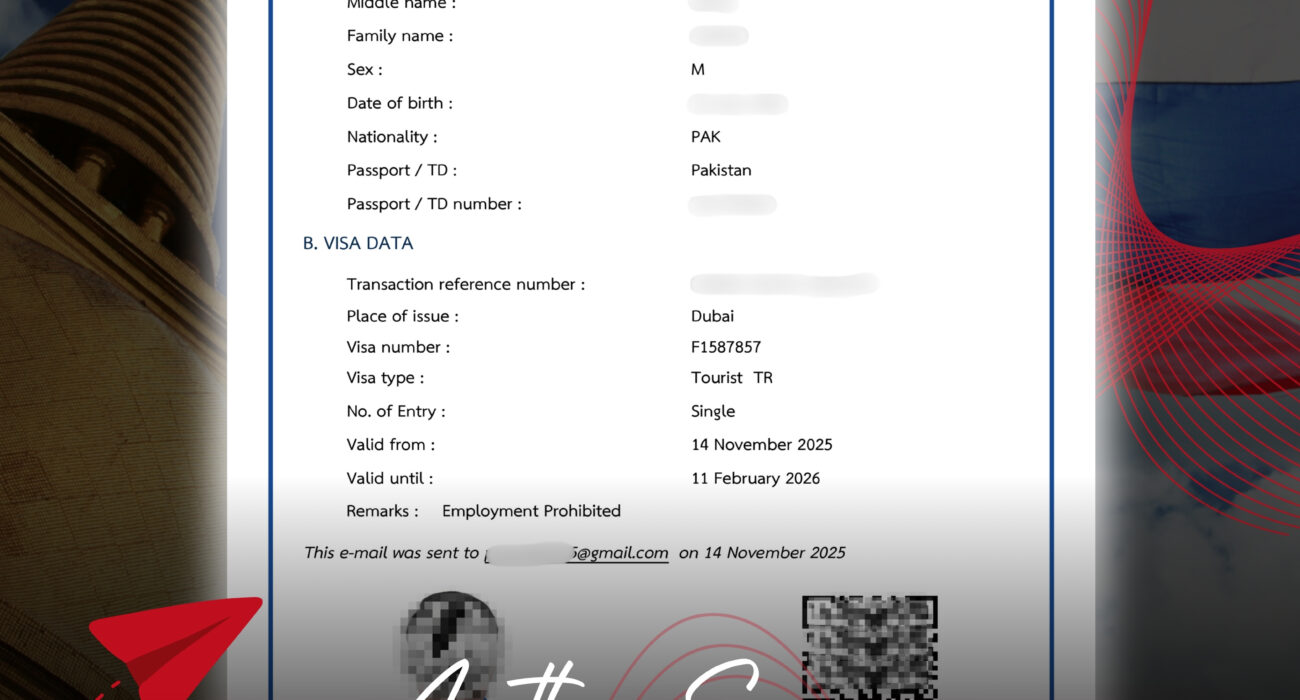
If you live in the UAE and you’ve been planning a Thailand trip, the headlines have probably confused you. Some say UAE residents get 30 days visa-free. Others say 60. A few say you need a visa. They’re all half right, and which half applies to you depends on one thing: the passport in your drawer. since 15 September 2026, Thailand has given eligible tourists 30 days without a visa. The old 60-day stay is gone. Your UAE residence visa and Emirates ID don’t count for this. Only your passport does. Emirati, Saudi, Bahraini, Kuwaiti, Omani, Qatari, Indian, and Filipino passports are on the 30-day list. Pakistani, Bangladeshi, Egyptian, Sri Lankan, and Nepali passports aren’t, so those travelers still need a visa before flying. Here’s how it works in practice, Thailand 30 Day Visa Free UAE Residents
Do UAE residents need a visa for Thailand? Thailand 30vDay Visa Free UAE Residents
Living in the UAE doesn’t change what Thailand asks of you at the border. Thai immigration looks at your nationality, not where you pay rent. So “UAE resident” isn’t a visa category. It only affects where you apply if you do need a visa.
Check your passport against this table first.
| Your passport | Rule from 15 Sept 2026 | What you do |
|---|---|---|
| UAE, Saudi Arabia, Bahrain, Kuwait, Oman, Qatar, Jordan | 30 days visa-free, tourism only | Submit the TDAC, carry your return ticket and proof of funds |
| India | 30 days visa-free | Same as above |
| Philippines | 30 days visa-free | Same as above |
| UK, USA, Canada, Australia, most of the EU | 30 days visa-free | Same as above |
| Russia, China, Kazakhstan | 30 days under a separate bilateral agreement | Same as above |
| Pakistan, Bangladesh, Egypt, Sri Lanka, Nepal | Visa required | Apply for a tourist e-visa before you book flights |
| Any other passport | Check the official list | Ask the Royal Thai Consulate-General in Dubai |
Indian passport holders had a scare earlier this year, when a paid Visa on Arrival was proposed. The Thai Cabinet reversed that in July, so Indians in Dubai, Sharjah and Abu Dhabi still get the free 30 days.
What changed on 15 September 2026 | Thailand 30 Day Visa Free UAE Residents.
Thailand introduced the 60-day visa-free stay in July 2024 to boost tourism. It lasted just over two years. The new rules cut the number of eligible countries from 93 to 60 and shorten the stay to 30 days.
Three details matter more than the headline number.
It’s for tourism only. The old rule covered tourism and short business contact. The new wording says tourism. If you’re flying in for meetings or a site visit, don’t assume the visa exemption covers you. A business trip needs the right visa.
Visa on Arrival is almost gone. Only Azerbaijan, Belarus and Serbia can still get it. Some older articles say UAE residents can get a visa on arrival in Bangkok. That isn’t true anymore.
Nobody’s current stay was cut. If you entered Thailand before 15 September, you keep the days stamped in your passport. The 30-day limit applies to entries from that date.
How long can you actually stay?
On paper, 30 days. If you want longer, you can apply for one extension of up to 30 days at a Thai immigration office. It costs 1,900 baht and you file it on form TM.7.
The catch is that the extension isn’t a right. The officer decides. So 60 days is the best case, not something to build a holiday around. If you’re planning five or six weeks, get a tourist visa before you leave. Overstaying costs 500 baht a day and can lead to a ban if it drags on, so it’s not worth gambling on.
What to have ready at Dubai, Abu Dhabi or Sharjah airport
Airline staff check some of this at check-in, and Thai immigration checks the rest. Most visa-free travellers pass without a question, but spot checks happen, so carry everything.
- A passport valid for at least 6 months. Airlines are strict about this.
- The Thailand Digital Arrival Card (TDAC). It’s free and done online. Submit it up to 3 days before you land. It replaced the old paper arrival card. Use the official immigration site only, because lookalike sites charge fees for nothing.
- A return or onward ticket that leaves within your 30 days.
- Your hotel address or booking.
- Proof of funds. The usual figure is 10,000 baht per person, or 20,000 baht per family. Cash or a bank statement works. It’s rarely asked for, but it’s one of the reasons people get turned back.
You may also see articles mentioning a Thai “ETA”. That’s a separate pre-approval scheme the government announced and then shelved when the TDAC launched. Don’t pay anyone for an ETA.
What if your passport isn’t on the list?
Then you apply for a visa first, and you do it online. Since January 2025, the Royal Thai Embassy in Abu Dhabi and the Royal Thai Consulate-General in Dubai take applications through the official Thai e-Visa portal, not at the counter.
For most Pakistani, Bangladeshi, Egyptian, Sri Lankan and Nepali residents, the route is the single-entry tourist visa. It gives you 60 days and can be extended once by 30 days inside Thailand. As a UAE resident you’ll normally need:
- a passport with 6 months’ validity
- a recent photo
- your UAE residence visa or Emirates ID
- proof of accommodation in Thailand
- a return ticket and proof of funds
The fee reported for UAE applicants has been AED 400. Fees change, so check the current amount on the e-Visa portal before you pay. Also, only pay through the official portal. Agents can submit on your behalf, but the fee itself goes through the portal. If you travel to Thailand often, ask about the multiple-entry tourist visa. It’s valid for 6 months with up to 60 days per entry, and it’s only issued through a Thai mission in the UAE for UAE-based applicants. Here’s one more thing people miss. If you’re in the UAE on a visit visa, you can’t apply for a Thai visa from here. You’d need to apply from your home country.
Planning a longer stay: remote work, winters, training camps
If 30 days won’t cut it, the visa-free route is the wrong tool. Thailand’s Destination Thailand Visa (DTV) covers remote workers and people joining courses like Muay Thai or cooking schools. It gives 180 days per entry. The rules got stricter on 31 August 2026. You now file with the embassy for your nationality or permanent residence, and you need a police clearance certificate. If you’re a UAE resident on a standard residence visa, it isn’t clear-cut which embassy handles your case, so ask before you spend money on documents.
Mistakes we’d tell a friend to avoid
- Treating “UAE resident” as a nationality. It isn’t, and this is the most common mistake.
- Reading a May article in October. Plenty of pages were written when the change was only a Cabinet decision. They still say 60 days or 93 countries. The final number is 60 countries, and the date was 15 September.
- Booking 45 days and hoping for the extension. If it’s refused, you’re leaving at day 30.
- Travelling for work on a tourist exemption. The wording changed, so don’t push it.
- Skipping the TDAC. It takes a few minutes and avoids a delay at the desk.
- Forgetting the land-border limit. If you cross into Thailand overland from Malaysia or Laos, visa-free entries by land are capped at two per calendar year.
Frequently asked questions
Do UAE residents need a visa to visit Thailand in 2026?
It depends on the passport you hold. Emirati, Indian, Filipino and most GCC passports get 30 days visa-free. Pakistani, Bangladeshi, Egyptian, Sri Lankan and Nepali passports need a visa. Your UAE residence visa doesn’t change this.
Is Thailand still giving 60 days visa-free?
No. The 60-day exemption ended for anyone entering on or after 15 September 2026.
Can I extend my 30 days in Thailand?
Yes, once, for up to 30 days. It costs 1,900 baht and is approved at the immigration officer’s discretion.
I’m Indian and live in Dubai. Do I need a Thai visa?
No. Indian passport holders get 30 days visa-free for tourism.
I’m Pakistani and live in the UAE. Can I enter Thailand visa-free?
No. You need to apply for a tourist e-visa before travelling.
Do I need the TDAC as well as a visa?
Yes. Every foreign visitor fills in the TDAC, whether visa-free or on a visa.
I booked before 15 September and entered Thailand on the old rule. Am I affected?
No. You keep the stay stamped on your arrival. Your next trip will fall under the 30-day rule.
Where do I apply for a Thai visa in the UAE?
Online through the Thai e-Visa portal. The Royal Thai Consulate-General in Dubai and the Royal Thai Embassy in Abu Dhabi process the applications.
Not sure which category your passport falls into?
Send us your nationality, travel dates and how long you want to stay. We’ll tell you whether you can fly visa-free, need a tourist visa, or should look at something longer-term, before you buy your tickets.