
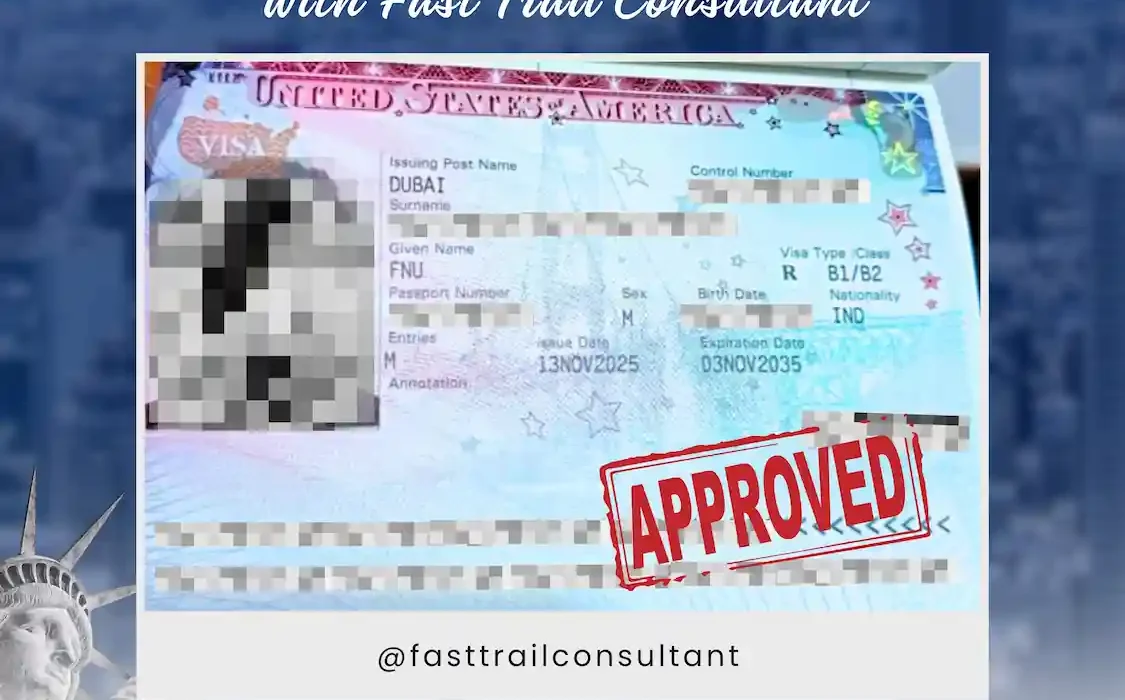
For many UAE residents, the U.S. visa interview is the most nerve-wracking part of the entire application process. You’ve filled out the DS-160, paid the fee, and booked your appointment but the few minutes you spend in front of a consular officer can feel like they carry all the weight.
Here’s the truth: the interview isn’t about memorizing perfect answers. There is no secret script that guarantees approval, and no answer that works for everyone. What the consular officer actually wants to see is that you understand your own trip, your own circumstances, and can explain both clearly and honestly. This guide walks UAE-based applicants through what to expect, what to prepare, and how to approach the most common questions—without promising outcomes no one can promise.
Quick Answer: How Can UAE Residents Prepare for a USA Visa Interview?
UAE residents should walk into their interview knowing exactly why they’re visiting the U.S., who is paying, what their job or business situation looks like, and how long they plan to stay. Answers should be truthful, specific, and consistent with the DS-160 form. No document or answer guarantees approval the goal is simply to represent your situation accurately and clearly.
What Is the Consular Officer Trying to Understand?
Every question in a visitor visa interview generally traces back to three underlying concerns.
Purpose of the Trip
The officer wants a clear picture: why are you going, what will you actually be doing, and where. Vague answers (just visiting) tend to invite more questions, not fewer.
Ability to Pay for the Trip
Who is financing the trip, and does the trip make sense given your income, savings, or business situation? A short vacation funded by your own salary raises very different questions than a long, expensive trip with an unclear funding source.
Intention to Leave the United States
This is often misunderstood as needing to prove you’ll come back with one magic document. In reality, officers weigh your overall circumstances employment, business, family responsibilities, and other ties rather than any single piece of paper. The State Department notes that additional evidence about trip purpose, intent to depart, and ability to pay may be requested depending on the individual case.
Before the Interview: Make Sure Your DS-160 and Your Story Match
Your DS-160 is the foundation of your interview. Review it carefully travel purpose, intended destinations, length of stay, employment details, previous travel, prior U.S. visits, family information, U.S. contacts, and funding information should all be fresh in your mind and consistent with what you say at the window.
What If Something on Your DS-160 Has Changed?
If your job, travel dates, or other details have genuinely changed since you submitted the form, don’t casually contradict your application on the spot. If the change is material, or you spot an actual error, follow the official instructions provided by your specific embassy or consulate rather than improvising an explanation during the interview.
Documents UAE Applicants Should Prepare
Core Application Documents
- Valid passport
- DS-160 confirmation page
- Appointment confirmation letter
- Fee/payment evidence, where applicable
- Photograph, if the upload requirement wasn’t met
The U.S. State Department’s visitor-visa guidance lists the passport, DS-160 confirmation, fee receipt (where required), and a photo (where not already uploaded) as the core items applicants should bring.
Supporting Documents
Depending on your situation, you may want to bring:
- Employment evidence from your UAE employer
- Salary or income evidence
- Business documentation, if self-employed
- Bank or financial records
- A travel itinerary
- Any other evidence relevant to your specific circumstances
These are not a checklist that guarantees anything. The embassy or consulate may ask for additional evidence beyond what you bring, and having every document on this list doesn’t override the officer’s overall assessment.
Do You Need an Invitation Letter From Someone in the USA?
No. According to the U.S. Department of State, a letter of invitation or Affidavit of Support is not required to apply for a visitor visa. Applicants qualify based on their own residence and ties abroad not on assurances from friends or family in the U.S. If you choose to bring one anyway, it simply isn’t a factor in the officer’s decision.
The Most Common USA Visa Interview Questions for UAE Applicants
Questions About Your Trip
Typical questions include why you’re going, the purpose of your visit, which cities you’ll visit, how long you’ll stay, where you’ll stay, why you chose the USA, why you’re traveling now, and whether you’re traveling alone.
How to approach it: Be specific but brief. State your actual purpose, your rough itinerary, and your planned length of stay.
Fictional example: I’m visiting New York and Orlando for two weeks to see the sights and spend time with my sister, who lives in New York. I’ll be staying with her for part of the trip and at a hotel for the rest.”
Questions About Your Job or Business in the UAE
Expect questions about what you do, where you work, how long you’ve worked there, your position, your income, who will cover your responsibilities while you’re away, and if applicable details about your business and how long you’ve run it.
How to approach it: Answer according to your actual job title, employer, and tenure. If you’re a business owner, be ready to briefly explain what the business does and who will manage it in your absence.
Questions About Your UAE Residence
You may be asked how long you’ve lived in the UAE, where you live, whether you rent or own, why you live there, and what will bring you back after your trip.
Living in the UAE isn’t, by itself, an automatic ticket to approval it’s one part of a broader picture the officer is putting together about your ties and circumstances.
Questions About Your Finances
Common questions cover who’s paying for the trip, the expected cost, your source of income, your savings, and whether anyone is sponsoring you.
Whatever you say here should genuinely match your real financial situation inconsistency is far more damaging than a modest but honest answer.
Questions About Family and Friends in the USA
You may be asked whether you have relatives or friends in the U.S., where they live, what they do, and whether you’ll be staying with them.
Answer truthfully and consistently with your DS-160. Having relatives in the U.S. is not something to hide inconsistent or evasive answers raise more concern than the relationship itself.
Questions About Previous Travel
Officers may ask about your international travel history, any prior U.S. visits, past visa refusals, overstays, or trips to other countries.
Answer honestly and briefly this is factual history, not something to reshape.
How Should You Answer USA Visa Interview Questions?
A simple framework works for almost every question:
- Answer the exact question asked
- Give the relevant fact
- Add one useful detail only if it’s genuinely necessary
- Stop
Turning every answer into a long explanation tends to introduce inconsistencies and slows the interview down. Interview-preparation guidance generally agrees: officers respond better to concise, specific answers than to rehearsed speeches.
Good Answer vs Bad Answer Practical Examples
Q: Why are you going to the USA?
- Weak: I’ve always dreamed of visiting America and I really want to see everything.
- Better: State your actual purpose, planned destinations, and approximate duration for example, a two-week trip to visit a sibling and see a couple of cities.
The second approach is clearer because it’s specific and verifiable not because it’s a winning script. The same principle applies across other common questions: on length of stay, give your actual planned dates rather than as long as possible; on employment, name your real employer and role rather than a generalized description; on funding, state clearly whether it’s your own savings, a joint arrangement, or a sponsor; on U.S. relatives, name the relationship honestly rather than omitting it; and on a past refusal, state it plainly rather than hoping it doesn’t come up.
How Long Should Your Answers Be?
There’s no fixed word count, but a few principles help:
- Don’t answer with a single word when context is genuinely needed
- Don’t offer an unprompted life story
- Speak naturally, not from memory
- Let the officer ask follow-up questions rather than trying to pre-empt every possible one
As a rule of thumb: keep your answer as long as necessary to answer the question clearly, but avoid adding unrelated information.
What UAE Applicants Should NOT Do During the Interview
- Don’t lie, exaggerate income, or claim fake employment
- Don’t hide a previous visa refusal or relevant U.S. relatives
- Don’t contradict your DS-160
- Don’t invent an itinerary
- Don’t memorize a scripted speech
- Don’t argue with the officer
- Don’t volunteer unnecessary information
- Don’t assume a large bank balance or an invitation letter guarantees approval
Misrepresentation during a visa interview can have serious, lasting consequences for future applications it’s not worth the risk.
Common Mistakes That Can Hurt a USA Visa Interview
- Not knowing your own DS-160
- Giving vague travel plans
- Giving answers that don’t match your actual circumstances
- Overexplaining
- Memorizing perfect answers instead of speaking naturally
- Being unable to explain how the trip is funded
- Hiding previous visa history
- Treating supporting documents as a guarantee
- Giving inconsistent answers to related questions
- Assuming UAE residency alone means automatic approval
Step-by-Step USA Visa Interview Preparation Guide for UAE Residents
- Review your DS-160 line by line
- Summarize your trip in one or two sentences
- Know your itinerary
- Calculate a realistic trip budget
- Prepare to explain your employment or business simply
- Identify your genuine ties to the UAE
- Review your travel history
- Prepare for questions about any U.S. relatives or friends
- Organize your required and supporting documents
- Practice speaking naturally, without memorizing
- Check the official instructions for your specific embassy or consulate before your appointment
- Answer naturally and truthfully on the day
Special Situations UAE Applicants Should Prepare For
If you’re self-employed: Be ready to explain what your work involves, how long you’ve done it, and roughly what it earns you.
If you’re a business owner: Be ready to describe your business activity, your role in it, and why you’ll return to run it.
If you’re salaried: Know your employer, position, tenure, and any leave arrangements for your trip.
If you have family in the USA: Answer questions about them truthfully this is normal and not disqualifying on its own.
If someone else is paying: Describe the arrangement accurately who they are, and why they’re covering the cost.
If you’ve been refused a U.S. visa before: Answer honestly, and be ready to explain what, if anything, has changed since then.
If you’ve visited the USA before: Know your previous trip dates, purpose, and general immigration history.
What If the Officer Asks an Unexpected Question?
Listen carefully, and don’t panic. If you genuinely didn’t understand, it’s fine to ask for clarification. Answer truthfully, don’t guess, and don’t invent information just to fill a silence. Keep your response relevant to what was actually asked.
What Happens After the USA Visa Interview?
Outcomes generally fall into a few categories: the visa is approved, refused, or the case goes into administrative processing or a request for additional documents. The consular officer makes the final determination, and if you’re asked for anything further, follow the official instructions you’re given.
Can Anyone Guarantee USA Visa Approval?
No. No visa consultant, agent, or blog post including this one can guarantee that a U.S. visa will be approved. The decision rests entirely with the relevant U.S. consular authority, based on your individual circumstances and the information you provide.
Frequently Asked Questions About USA Visa Interviews for UAE Applicants
What questions are asked in a USA tourist visa interview for UAE residents?
Typically questions cover trip purpose, funding, employment or business, UAE ties, and any U.S. contacts or prior travel history see the sections above for detail.
How should I answer “Why do you want to visit the USA?”
State your actual purpose and rough plans specifically sightseeing, visiting family, a short vacation rather than a vague or emotional answer.
How long should I stay in the USA on a tourist visa?
There’s no fixed rule; your stated length of stay should simply match your actual plans and be reflected in your DS-160.
What documents should UAE residents take to a U.S. visa interview?
Your passport, DS-160 confirmation, appointment confirmation, fee evidence where applicable, and any relevant supporting documents for your circumstances.
Do I need an invitation letter for a USA tourist visa?
No the State Department has stated this is not required and isn’t a factor in the decision.
Does having a job in Dubai help with a USA tourist visa?
Stable employment can be one relevant factor among many that officers consider regarding your ties abroad, but it isn’t a guarantee on its own.
How do I prove my ties to the UAE?
Through consistent, honest answers about your employment, business, residence, and family responsibilities not through any single document.
What if I have relatives in the USA?
Disclose them accurately on your DS-160 and answer any related questions truthfully.
What if someone else is paying for my USA trip?
Explain the funding arrangement clearly and accurately when asked.
Can I apply for a U.S. tourist visa while living in the UAE?
Yes, UAE residents including expatriates regularly apply for U.S. visitor visas through their local embassy or consulate.
Should I mention my previous U.S. visa refusal?
Yes answer honestly if asked; concealing it can be far more damaging than the refusal itself.
What if my DS-160 information has changed?
Follow the official instructions for your specific post rather than improvising an explanation at the interview.
How much money should I show for a USA tourist visa?
There’s no official minimum figure what matters is that your financial evidence reasonably supports your stated trip.
Can I get a USA tourist visa without an invitation letter?
Yes it isn’t required.
Can a visa consultant guarantee approval?
No no one can guarantee the outcome of a visa application.
What should I wear to a USA visa interview?
Neat, business-casual attire is generally a safe choice, though there’s no strict official dress code.
How can I answer confidently without memorizing answers?
Know your own trip, job, and finances well enough that you can describe them naturally, rather than relying on rehearsed phrasing.
What happens if my USA visa interview is refused?
The officer will typically explain the basis for refusal; review the notice you’re given and any guidance on next steps or reapplying.
Final USA Visa Interview Checklist for UAE Applicants
Before you leave for the interview:
- Passport
- DS-160 confirmation
- Appointment confirmation
- Required fee/payment evidence
- Photo, if required
- Relevant employment/business evidence
- Financial evidence where appropriate
- Travel information
- Previous visa/travel information
- A full review of your DS-160 answers
- A clear understanding of your trip purpose
- A clear understanding of who is paying
- A clear understanding of your intended length of stay
Requirements can vary by post and change over time, so it’s worth checking the latest official instructions for your specific U.S. embassy or consulate before your appointment.
Get Professional USA Visa Assistance in Dubai
If you’d rather not navigate the DS-160, document preparation, and interview prep alone, Fast Trail Consultant, a Dubai-based visa consultancy, can help UAE applicants prepare their application and organize the supporting documentation for their U.S. visa interview. Professional guidance can make the preparation process smoother and less stressful but as with any U.S. visa application, the final decision always rests with U.S. consular authorities.
Conclusion
A U.S. visa interview isn’t a memory test. It’s a short conversation where a consular officer is trying to understand your genuine travel purpose, your circumstances, and whether your answers hold together. The best preparation isn’t a script it’s knowing your own application inside and out, and being ready to explain it honestly and clearly.
If you’d like help getting organized before your interview, Fast Trail Consultant in Dubai can walk you through preparation and documentation for your U.S. visa application.